The modern office is no longer defined by rows of identical desks, fixed workstations, and conventional meeting rooms. As businesses adapt to changing employee expectations, hybrid work arrangements, and evolving operational needs, office furniture is becoming an increasingly important part of workplace planning.
In Malaysia, companies are looking beyond furniture appearance and considering how their office environments can support productivity, employee comfort, space efficiency, and long-term business flexibility.
For startups, SMEs, and established organisations, choosing the right office furniture involves balancing functionality, aesthetics, and financial considerations.
Whether you are establishing a new workplace, expanding your existing office, or upgrading outdated furniture, understanding the latest office furniture trends in Malaysia for 2026 can help you make more informed decisions.
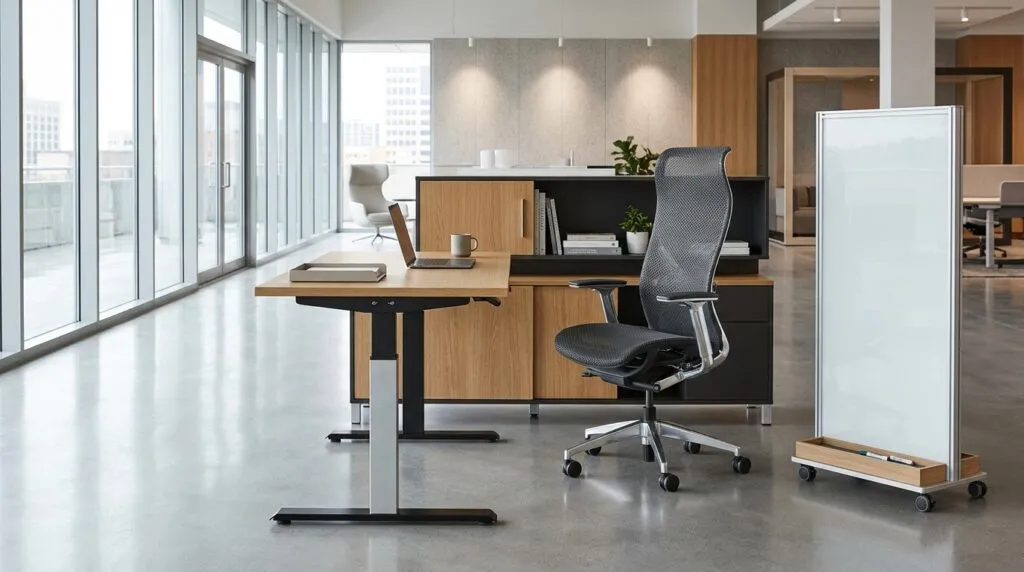
Here are seven workplace furniture trends worth considering and how businesses can apply them practically.
1. Ergonomic Office Furniture Becomes a Workplace Priority
Employee comfort continues to influence office furniture selection in 2026.
As many employees spend extended periods working at computers, businesses are paying greater attention to furniture that supports appropriate posture and comfortable working positions.
Ergonomic office furniture is designed to accommodate different physical requirements and reduce unnecessary strain during daily activities.
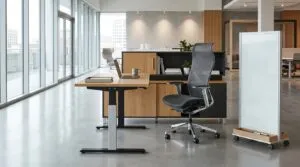
Popular considerations include adjustable office chairs, appropriate desk heights, lumbar support, and comfortable workstation arrangements.
For shared workspaces, furniture adjustability is particularly important because the same workstation may be used by different employees.
How Malaysian Businesses Can Apply This Trend
Instead of selecting chairs based solely on appearance or price, evaluate features such as:
- Adjustable seat height and back support
- Appropriate seat depth and armrest positioning
- Comfortable desk and monitor arrangements
- Durability for regular workplace use
Businesses do not necessarily need premium furniture throughout the entire office. Prioritising suitable chairs and workstations for employees who spend long hours at their desks is a practical starting point.
Business takeaway: Ergonomic furniture should be treated as a workplace functionality consideration rather than merely an aesthetic upgrade.
2. Modular Office Furniture Supports Flexible Workspace Design
Traditional offices often rely on permanent furniture arrangements that are difficult to change without significant disruption.
In 2026, adaptable office layouts are receiving greater attention as businesses seek workspaces that can accommodate changing team sizes and different activities.
Modular office furniture is designed to be arranged or combined in different configurations.
Examples include movable tables, modular workstations, flexible meeting arrangements, and storage units that can be repositioned when necessary.
This approach can be useful for organisations that regularly reorganise departments or require different workspace arrangements for individual and collaborative work.
How Malaysian Businesses Can Apply This Trend
Consider furniture that supports multiple layouts without requiring extensive modifications.
For example, a training room may use movable tables that can be arranged for presentations, group discussions, or individual activities.
Similarly, modular workstations may make it easier to adjust seating arrangements when teams expand.
Before investing, businesses should assess the available floor area, electrical connections, and practical limitations of moving furniture.
Business takeaway: Adaptable furniture can help extend the usefulness of an office layout as operational requirements change.
3. Space-Saving Furniture for Smaller Offices
Not every business has the budget or operational need for a large corporate office.
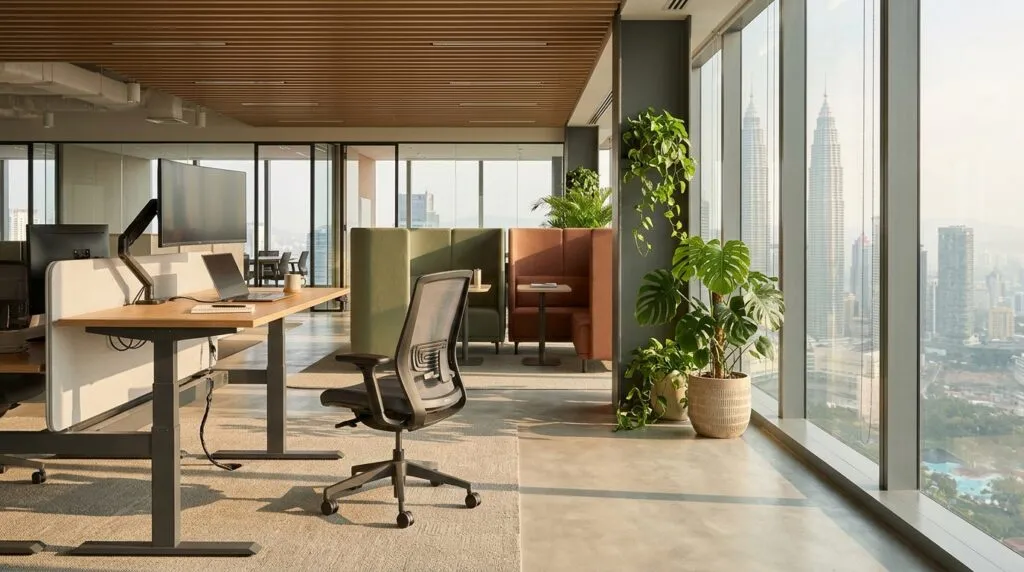
For Malaysian SMEs, efficient use of available space remains an important consideration when selecting furniture.
Space-saving office furniture focuses on maintaining functionality without occupying unnecessary floor area.
This may include compact desks, shared storage solutions, appropriately sized meeting tables, and furniture with multiple practical uses.
However, space efficiency should not come at the expense of employee comfort or safe movement.
How Malaysian Businesses Can Apply This Trend
Begin by reviewing how the office is used.
Identify areas with unnecessary furniture, underutilised meeting spaces, or inefficient workstation arrangements.
Choose furniture dimensions that match actual working requirements rather than automatically selecting the largest available models.
For example, employees who primarily work on laptops may have different desk requirements from staff using multiple monitors or extensive documentation.
Storage planning is equally important. Well-organised cabinets and shared storage areas can reduce clutter without compromising access to essential materials.
Business takeaway: A functional office is not necessarily a larger office. Thoughtful furniture selection can improve the usability of existing space.
4. Hybrid Work Encourages Multi-Purpose Office Spaces
Hybrid working arrangements have influenced how businesses use their physical offices.
For some organisations, employees attend the workplace primarily for collaboration, meetings, training, and activities requiring face-to-face interaction.
This changes the role of office furniture.
Rather than relying exclusively on permanently assigned workstations, businesses may require a combination of shared desks, meeting areas, and spaces for focused work.
The ideal arrangement depends on actual employee attendance patterns and operational requirements.
How Malaysian Businesses Can Apply This Trend
Businesses adopting hybrid work should evaluate their peak office occupancy before changing furniture quantities.
Consider creating distinct areas for:
- Individual focused work
- Team discussions and collaboration
- Video meetings and virtual communication
- Informal conversations
- Shared administrative activities
Furniture should support the intended activities within each area.
For example, meeting rooms may require suitable tables, comfortable seating, and space for communication equipment.
Shared workstations should accommodate different users without requiring complicated adjustments.
Business takeaway: Hybrid office design works best when furniture decisions are based on how employees actually use the workplace.
5. Minimalist and Professional Office Aesthetics
Office furniture contributes to the impression a business creates for employees, customers, and visitors.
In 2026, minimalist workplace design remains relevant because it emphasises simplicity, functionality, and visual organisation.
Neutral colours, clean furniture lines, coordinated workstations, and uncluttered layouts can help create a professional environment.
However, minimalist design should not be confused with an empty or uncomfortable workplace.
The objective is to create a balanced office that looks organised while supporting daily business activities.
How Malaysian Businesses Can Apply This Trend
Start with a consistent furniture style across major working areas.
Choose complementary colours and materials for desks, chairs, cabinets, and meeting furniture.
Avoid introducing too many unrelated furniture designs into the same workspace.
Businesses can also incorporate brand colours through selected furniture finishes or accessories without compromising the overall professional appearance.
For customer-facing offices, reception furniture and meeting areas deserve particular attention because they contribute to the visitor experience.
Business takeaway: A coordinated office environment can strengthen a company’s professional image without requiring extravagant interior design.
6. Sustainable Furniture and Longer Product Lifecycles
Sustainability is increasingly considered alongside cost, durability, and functionality in workplace procurement decisions.
For office furniture, this means looking beyond the initial purchase price and considering how long an item can remain useful.
Durable furniture that can be maintained, repaired, or reused may help reduce unnecessary replacement and material waste.
Businesses may also consider furniture made with responsibly sourced materials or components that can be recycled where suitable facilities exist.
However, sustainability claims should be supported by credible product information rather than general marketing descriptions.
How Malaysian Businesses Can Apply This Trend
When evaluating furniture, consider:
- Expected product lifespan
- Material durability
- Availability of replacement components
- Maintenance requirements
- Potential for reuse or refurbishment
- End-of-use disposal arrangements
Leasing may also be worth evaluating where the provider has established processes for maintaining, reusing, or responsibly managing returned furniture.
However, renting furniture is not automatically more sustainable than buying. Environmental outcomes depend on product durability, transportation, maintenance, and what happens at the end of the rental period.
Business takeaway: Sustainable furniture planning begins with selecting suitable, durable products and managing their useful lifespan responsibly.
7. Flexible Furniture Acquisition and Leasing Arrangements
One of the most practical considerations for Malaysian businesses is not only which furniture to select, but also how to finance it.
Purchasing office furniture outright provides ownership, but it can require substantial initial expenditure.
For businesses establishing new offices or expanding their workforce, this investment may compete with other priorities such as recruitment, technology, and operational development.
Office furniture rental provides an alternative.
Through an agreed leasing arrangement, businesses can explore scheduled payments rather than paying the entire purchase amount upfront.
This may help companies manage working capital while obtaining the furniture needed for daily operations.
How Malaysian Businesses Can Apply This Trend
Before deciding whether to rent or buy office furniture, assess:
- Initial capital available
- Expected furniture usage duration
- Monthly budget requirements
- Future workforce changes
- Total rental payments versus ownership costs
- Maintenance and end-of-contract responsibilities
For businesses with stable, long-term requirements, purchasing may provide better overall value.
For organisations prioritising cash flow or planning around a defined usage period, leasing may be worth considering.
Business takeaway: Furniture acquisition should be aligned with financial planning and operational requirements, not just the initial purchase price.
Which Office Furniture Trends Should Malaysian SMEs Prioritise?
Not every workplace trend is equally relevant to every business.
A small accounting firm, a technology startup, and a corporate headquarters may have very different furniture requirements.
Rather than following every design trend, businesses should focus on improvements that address their most important operational challenges.
| Business Priority | Recommended Furniture Focus |
| Employee comfort | Ergonomic chairs and suitable desks |
| Limited office space | Compact workstations and organised storage |
| Business expansion | Modular furniture and adaptable layouts |
| Hybrid work arrangements | Shared workstations and collaboration furniture |
| Professional brand image | Coordinated furniture and reception areas |
| Long-term asset value | Durable, maintainable furniture |
| Cash flow management | Compare furniture leasing and outright purchase |
The most effective office furniture strategy combines employee needs, workspace functionality, and financial sustainability.
How to Plan an Office Furniture Upgrade in 2026
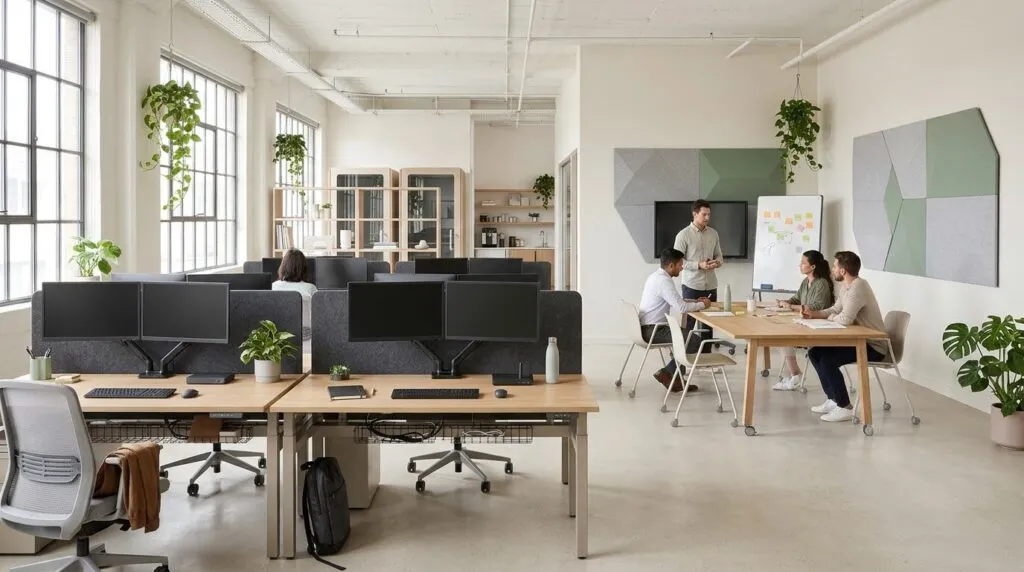
Before replacing existing furniture, businesses should conduct a simple workplace assessment.
Begin by reviewing which furniture items are no longer suitable for daily operations.
Consult employees about workstation comfort and identify areas where the existing layout creates inconvenience.
Next, consider future requirements such as workforce growth, departmental changes, or new working arrangements.
Prepare an itemised furniture budget covering essential workstations, meeting areas, storage, and shared spaces.
Finally, compare available furniture options based on specifications, durability, total cost, and suitability for the intended usage period.
This structured approach can help businesses avoid unnecessary purchases while ensuring their workplace remains practical and comfortable.
Explore Office Furniture Rental Solutions with RENTL
RENTL by Nazarul Corporation (M) Sdn Bhd provides business equipment rental and leasing solutions for organisations seeking alternatives to purchasing workplace assets outright.
Through its office furniture category, RENTL helps businesses explore furniture leasing arrangements based on their operational requirements and budget considerations.
Companies can also enquire about complementary workplace equipment, including work PCs, multi-function printers, office equipment, communication systems, and IT equipment.
Whether you are setting up a new office, expanding your workforce, or reviewing your existing workplace arrangements, RENTL offers a practical starting point for discussing your equipment rental requirements.
Available furniture models, specifications, rental periods, and contract conditions can be confirmed during consultation.
Conclusion: Build a Workplace That Supports Your Business
Office furniture trends in Malaysia for 2026 reflect a broader shift towards workplaces that prioritise comfort, adaptability, functionality, and responsible financial planning.
From ergonomic seating and modular furniture to flexible office layouts and leasing arrangements, businesses have several opportunities to improve their workplaces.
However, the most suitable furniture choices are those that address genuine business requirements rather than simply following the latest design preferences.
By evaluating employee needs, available space, equipment quality, and financial commitments, organisations can create workplaces that remain functional and relevant over time.
Planning an Office Furniture Upgrade?
Explore RENTL’s office furniture rental solutions and discuss suitable leasing arrangements for your business.