The modern workplace is evolving. Many businesses are moving beyond traditional office arrangements where every employee has a permanently assigned desk and attends the workplace five days a week.
Hybrid work arrangements, shared workstations, collaborative spaces, and flexible working schedules have encouraged organisations to reconsider how their offices are designed and equipped.
For Malaysian businesses, this creates an important question: How can an office remain productive, comfortable, and cost-efficient when the number of employees using it changes throughout the week?
A flexible office setup offers a practical solution.
By combining adaptable workplace layouts with suitable furniture, businesses can create office environments that accommodate different working arrangements without sacrificing employee comfort or operational efficiency.
Office furniture rental can also support this approach by allowing companies to evaluate leasing arrangements rather than committing substantial capital to furniture ownership.
In this article, we explore how flexible office design works, the furniture considerations that matter most, and how RENTL by Nazarul Corporation (M) Sdn Bhd can support businesses planning more adaptable workplaces.
What Is a Flexible Office Setup?
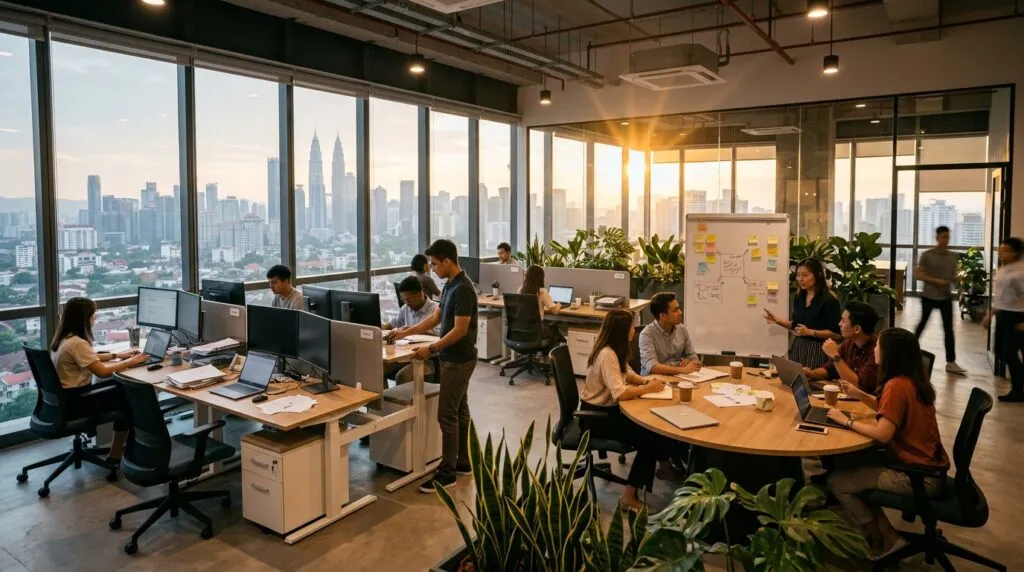
A flexible office setup is a workplace arrangement designed to accommodate changing employee numbers, working styles, and business requirements.
Unlike a traditional office where furniture and workstations remain fixed, a flexible workplace allows different areas to serve multiple purposes.
For example, a meeting area may accommodate team discussions in the morning and individual work sessions later in the day.
Similarly, shared workstations can support employees who attend the office on different schedules.
Common features of a flexible office include:
- Shared desks and workstations
- Adaptable seating arrangements
- Collaborative meeting spaces
- Multi-purpose furniture
- Dedicated areas for focused work
- Office equipment that supports different users
The objective is not simply to reduce the number of desks. It is to create a functional workplace that responds to how employees actually use the office.
Why Hybrid Work Is Changing Office Furniture Requirements
Hybrid work combines remote working with scheduled or flexible office attendance.
Depending on the organisation, employees may work from home on certain days and attend the office for meetings, collaboration, training, or tasks requiring physical presence.
This creates different workplace requirements compared with a traditional office model.
1. Office Occupancy May Change Throughout the Week
A business with 50 employees may not necessarily require 50 permanently assigned workstations if employees attend the office on different schedules.
However, the number of workstations required should be determined by actual attendance patterns rather than assumptions.
Businesses should assess peak occupancy, departmental requirements, and employee preferences before reducing their office furniture capacity.
2. Collaboration Spaces Become More Important
When employees spend part of their working week remotely, office attendance may become more focused on collaboration and face-to-face interaction.
Meeting tables, discussion areas, and adaptable seating arrangements can help support these activities.
A flexible office should therefore balance individual workstations with spaces designed for teamwork.
3. Shared Furniture Must Accommodate Different Employees
In a hybrid workplace, the same desk or chair may be used by different employees throughout the week.
Adjustable office chairs, suitable desk heights, and organised workstation layouts become especially important.
Furniture that accommodates different users can help create a more comfortable and inclusive working environment.
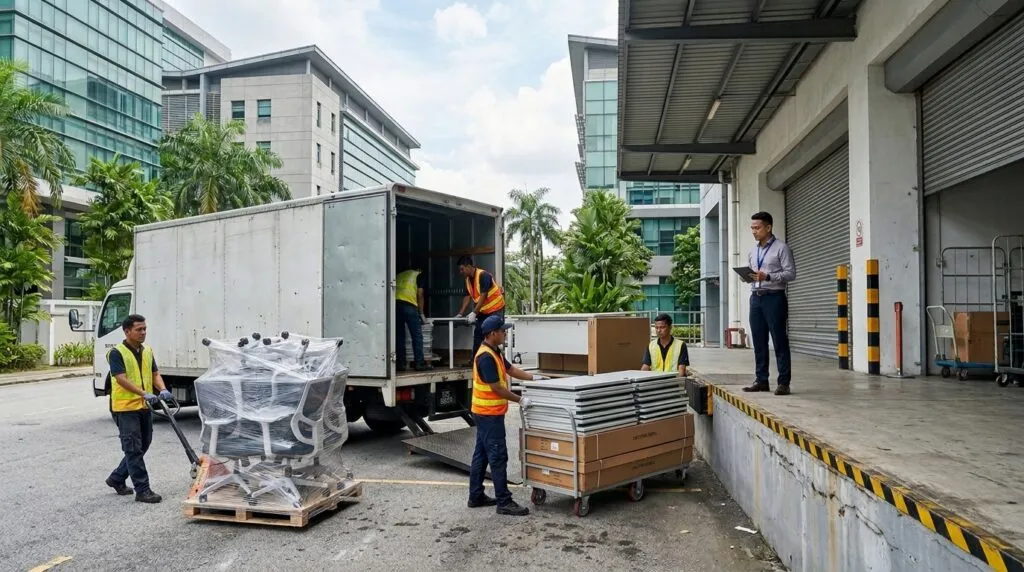
Five Ways Rental Furniture Can Support a Flexible Office
1. Reduce Large Upfront Furniture Investments
Setting up a new office requires careful financial planning.
Purchasing desks, chairs, meeting tables, and storage furniture can involve substantial upfront expenditure, particularly when a business is also investing in IT equipment, recruitment, and operational infrastructure.
Office furniture rental provides an alternative payment structure.
Instead of purchasing every furniture item outright, businesses can explore leasing arrangements with scheduled payments over an agreed period.
This can help preserve working capital for other business priorities.
For SMEs and growing organisations, maintaining financial flexibility may be particularly valuable when office requirements are still developing.
2. Support Changing Workforce Requirements
Business growth is rarely predictable.
Companies may recruit additional employees, reorganise departments, establish project teams, or adjust their hybrid work policies.
These developments can change the amount and type of furniture required.
For example, a company transitioning from individual workstations to shared desks may need fewer permanent desks but more collaborative furniture.
A rental arrangement may provide an opportunity to discuss furniture requirements in relation to the organisation’s expected usage period.
However, the ability to increase, reduce, exchange, or return furniture depends on the terms of the leasing agreement.
Businesses should confirm these provisions before committing.
3. Make Office Expansion More Manageable
Opening a new branch or expanding an existing workplace involves more than finding additional office space.
Businesses must also plan furniture requirements, equipment availability, employee comfort, and financial commitments.
For organisations expanding in stages, furniture rental can be considered alongside other workplace equipment solutions.
This approach allows decision-makers to evaluate their office setup requirements without automatically committing to outright ownership.
It is particularly relevant when a company is uncertain about its future headcount or the duration of a particular office arrangement.
4. Support Different Workplace Activities
A flexible office should accommodate the tasks employees perform rather than relying on a single furniture arrangement for every department.
Different activities may require different spaces.
For example:
- Individual desks for focused work
- Meeting tables for team discussions
- Comfortable seating for informal collaboration
- Storage solutions for shared workplace resources
- Adjustable chairs for shared workstations
Businesses should prioritise furniture that is practical, comfortable, and appropriate for its intended use.
Modular or movable furniture may be useful where frequent layout changes are expected, although the suitability of particular designs depends on the products available.
5. Align Furniture Planning with Business Needs
Furniture purchasing decisions are often made during office setup and revisited only when items need replacement.
A flexible workplace requires a more deliberate approach.
Businesses should periodically review whether their existing furniture supports employee attendance patterns, operational requirements, and available floor space.
When considering rental furniture, organisations can assess their requirements against an agreed contract period.
This encourages more structured workplace planning and helps avoid selecting furniture solely based on immediate needs.
Essential Furniture for a Hybrid Office Setup
A successful hybrid workplace requires furniture that supports comfort, accessibility, and efficient use of space.
Ergonomic Office Chairs
Shared workstations should accommodate employees with different physical requirements.
Adjustable chairs with appropriate back support and seat-height adjustment can help users establish comfortable sitting positions.
When selecting chairs, businesses should consider adjustability, durability, and suitability for daily office use.
Functional Office Desks
Desks should provide sufficient space for computers, monitors, keyboards, and work materials.
For shared workstations, organised desk layouts and appropriate cable management can help employees transition between users more easily.
Height-adjustable desks may also be considered where appropriate.
Meeting and Collaboration Furniture
Meeting tables and suitable seating remain important in hybrid offices.
Businesses should consider the number of employees who typically attend meetings in person and whether spaces also need to accommodate video conferencing.
Furniture arrangements should support both face-to-face discussions and hybrid meetings.
Storage and Office Organisation
Shared workplaces often require a different approach to personal and departmental storage.
Cabinets, shelving, and designated storage areas can help keep common workspaces organised.
Where employees do not have permanently assigned desks, secure personal storage may also be worth considering.

How to Plan a Flexible Office Layout
Creating a flexible office does not necessarily require a complete workplace renovation.
Businesses can begin by evaluating how their existing space is being used.
Step 1: Review Employee Attendance Patterns
Identify how many employees attend the office on typical and peak working days.
This helps determine the number of workstations and meeting spaces required.
Step 2: Identify Different Working Activities
Consider the balance between focused work, meetings, collaboration, and administrative tasks.
Different departments may require different furniture arrangements.
Step 3: Prioritise Employee Comfort
Ensure desks, chairs, and shared workstations are suitable for their intended users.
A flexible workplace should not compromise basic ergonomic principles.
Step 4: Assess Available Office Space
Review circulation areas, workstation spacing, meeting room capacity, and storage requirements.
Avoid overcrowding simply to accommodate more furniture.
Step 5: Compare Furniture Ownership and Rental Options
Evaluate the cost of purchasing furniture against available rental arrangements.
Consider upfront expenditure, total contract cost, expected usage duration, and maintenance responsibilities.
The best solution should support both operational needs and financial planning.
Common Mistakes to Avoid When Designing a Hybrid Office
Although flexible office layouts can offer practical advantages, poor planning may create new workplace challenges.
One common mistake is reducing workstation numbers without understanding peak attendance.
If too many employees arrive on the same day, insufficient desks and meeting spaces can disrupt productivity.
Another mistake is prioritising furniture mobility over employee comfort.
Furniture should remain suitable for regular workplace use, even when flexibility is an important design consideration.
Businesses should also avoid overlooking the technology required for hybrid meetings and shared workstations.
Reliable communication systems, computers, and suitable IT equipment remain essential to an effective workplace.
Finally, organisations should review rental agreements carefully. Contract duration, equipment condition, servicing responsibilities, and end-of-term arrangements can affect the overall value of leasing.
A flexible office is most effective when furniture, technology, employee needs, and operational processes are planned together.
How RENTL Supports Flexible Workplace Requirements
RENTL by Nazarul Corporation (M) Sdn Bhd provides office equipment rental and leasing solutions for businesses seeking practical alternatives to outright purchasing.
Through its office furniture category, RENTL helps organisations explore furniture rental arrangements based on their workplace requirements and budget considerations.
Businesses can also enquire about complementary office equipment categories, including:
- Work PCs
- Multi-function printers
- Office equipment
- Communication systems
- IT equipment
- Air and water purifiers
This range allows businesses to consider furniture and essential workplace equipment as part of a broader office setup plan.
Whether your organisation is establishing a new workplace, expanding an existing office, or adapting to hybrid work arrangements, RENTL offers a starting point for discussing suitable equipment rental solutions.
Available furniture models, contract conditions, and support arrangements can be confirmed during consultation.
Conclusion: Build an Office That Adapts to Your Business
A flexible office setup is about creating a workplace that supports how employees work today while remaining practical for future business requirements.
For organisations adopting hybrid work, this means reviewing workstation capacity, furniture suitability, collaboration spaces, and overall office functionality.
Office furniture rental can form part of this strategy by providing an alternative to large upfront furniture purchases.
The right approach depends on your organisation’s financial priorities, expected usage period, and workplace requirements.
Planning a Flexible Office Setup?
Explore RENTL’s office furniture and business equipment rental solutions to find an arrangement that suits your operational needs.